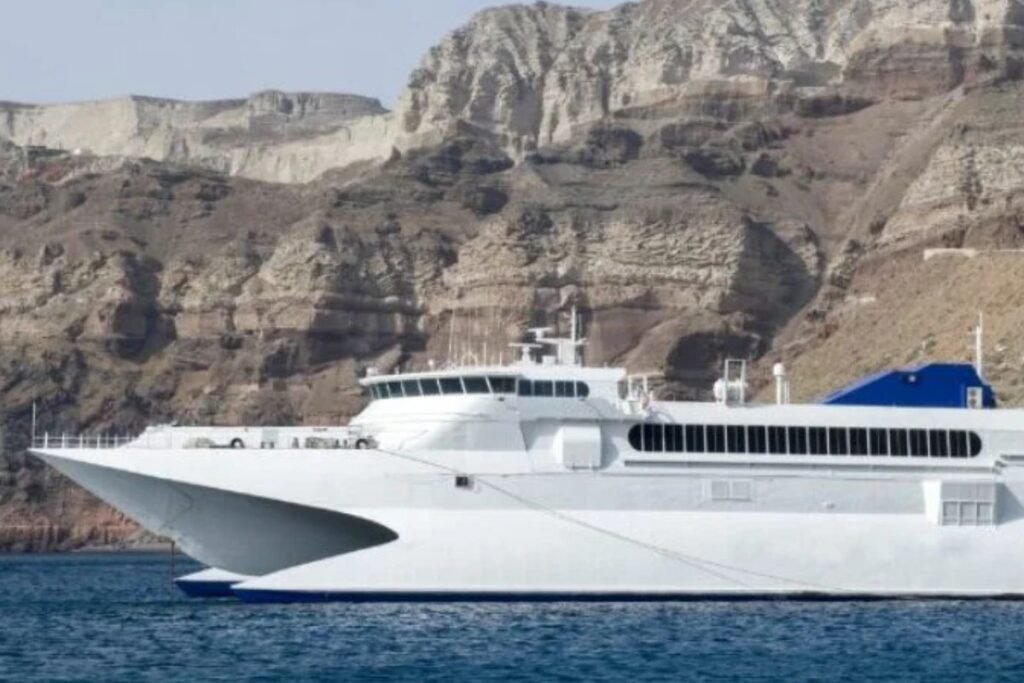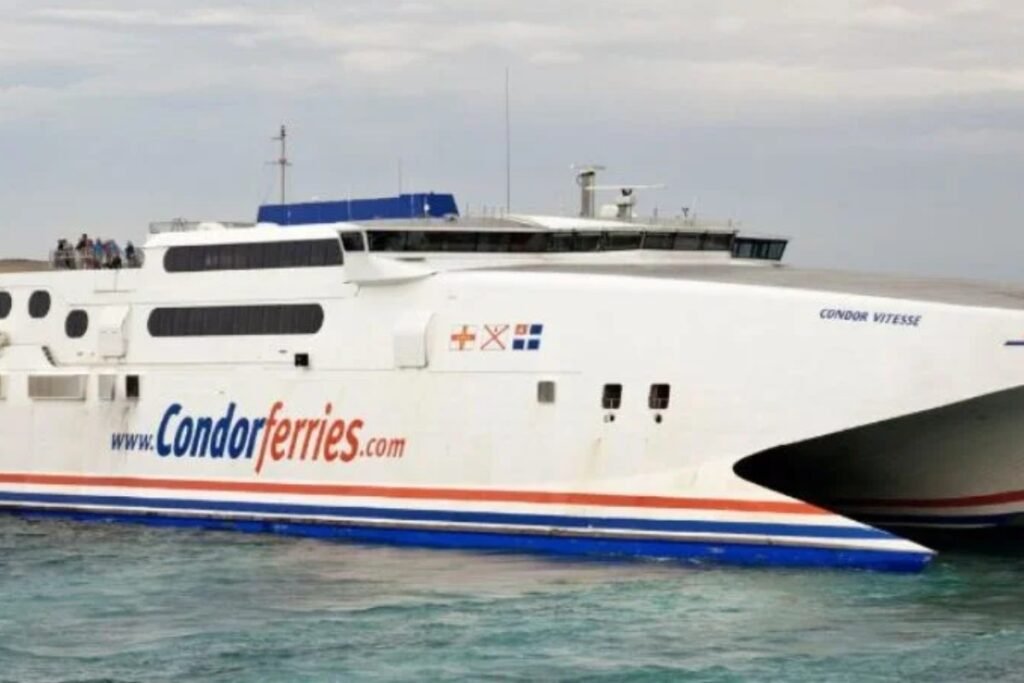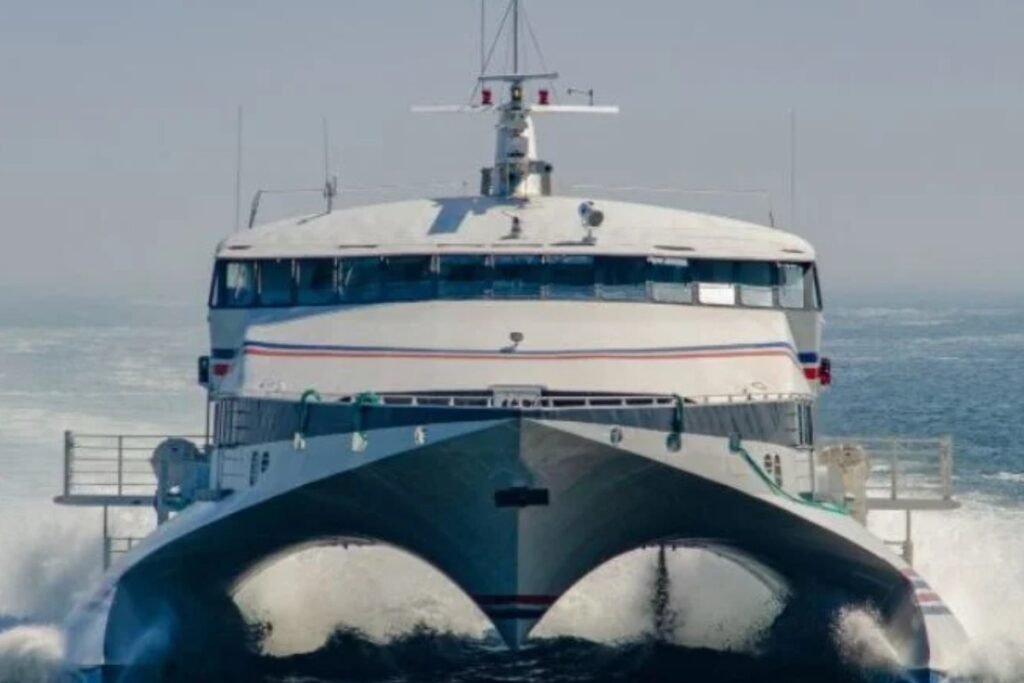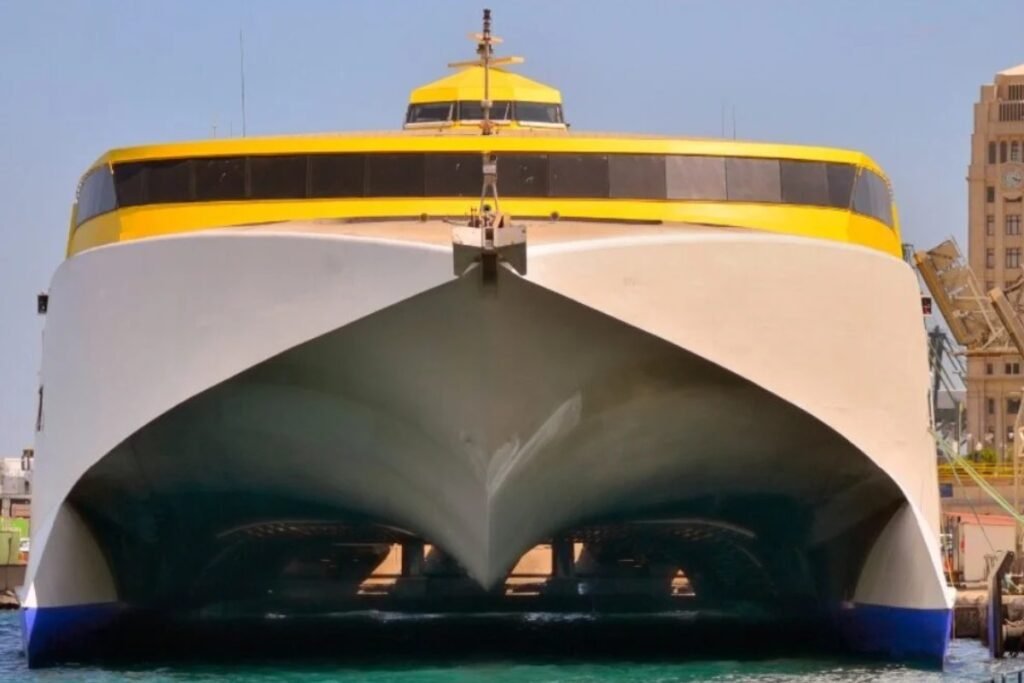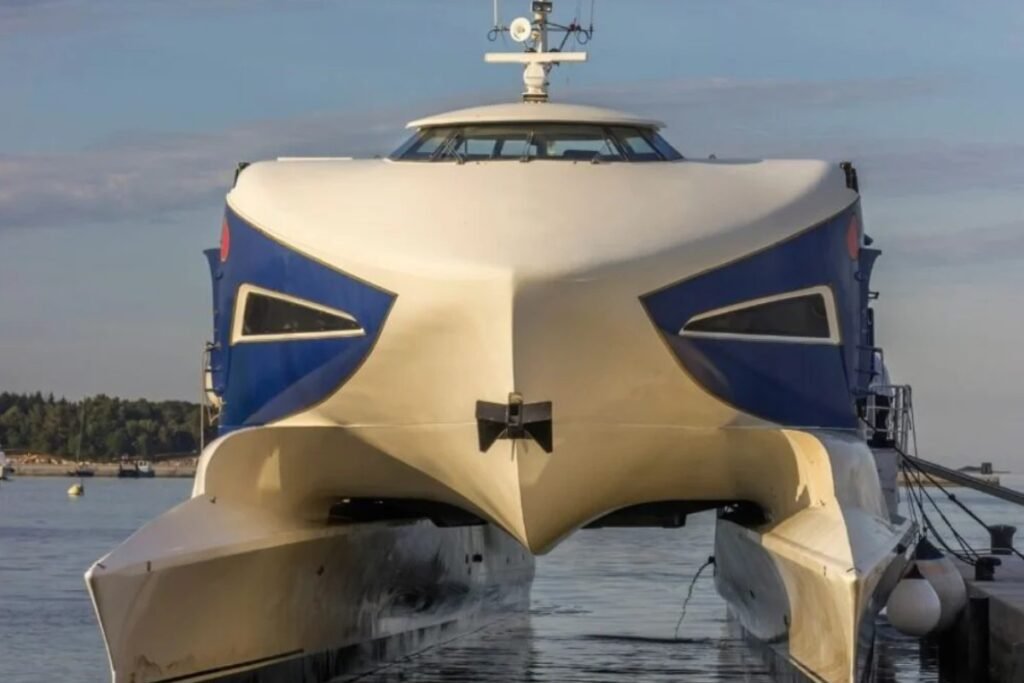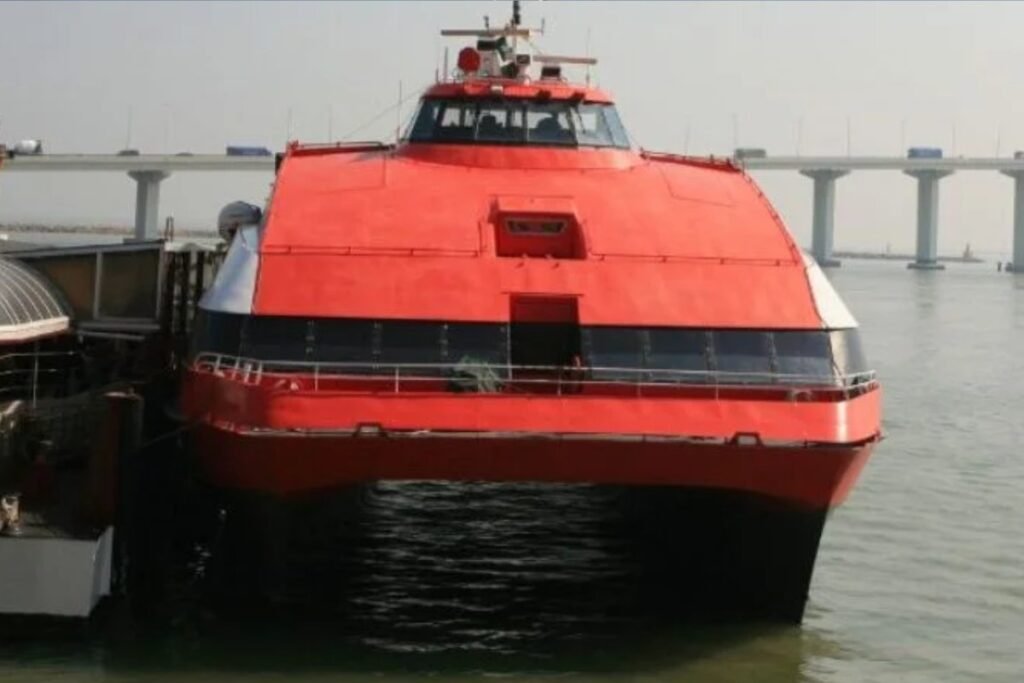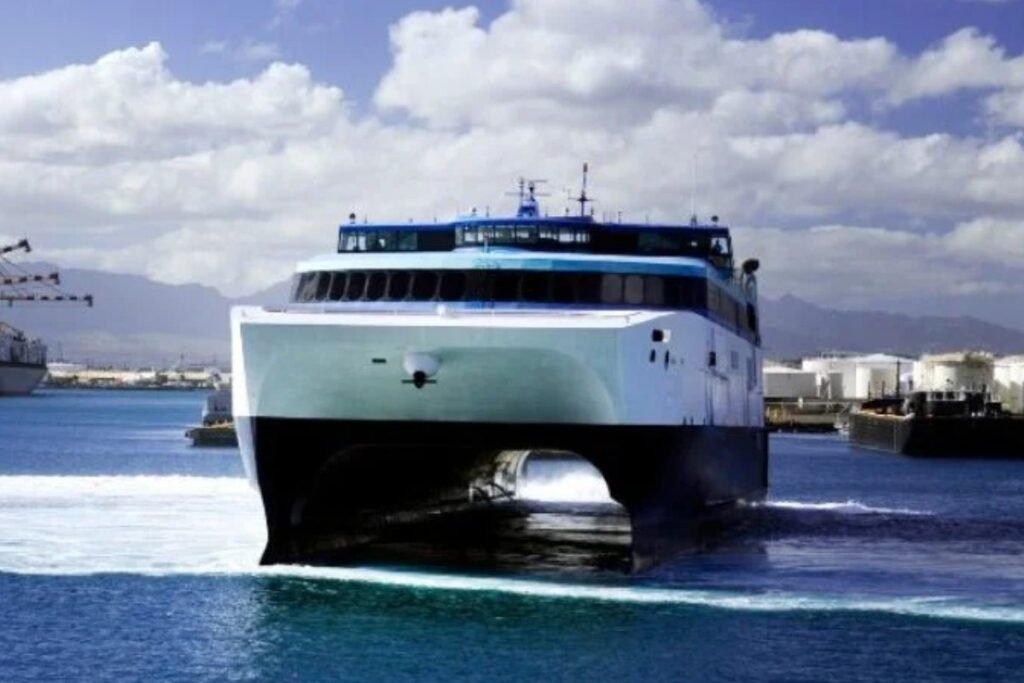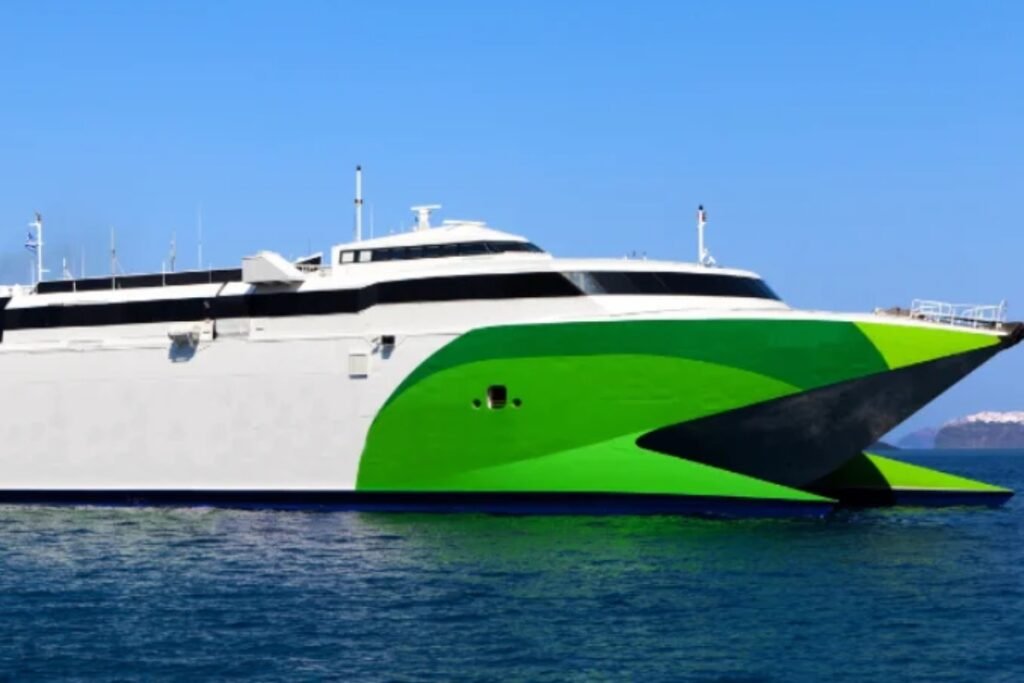
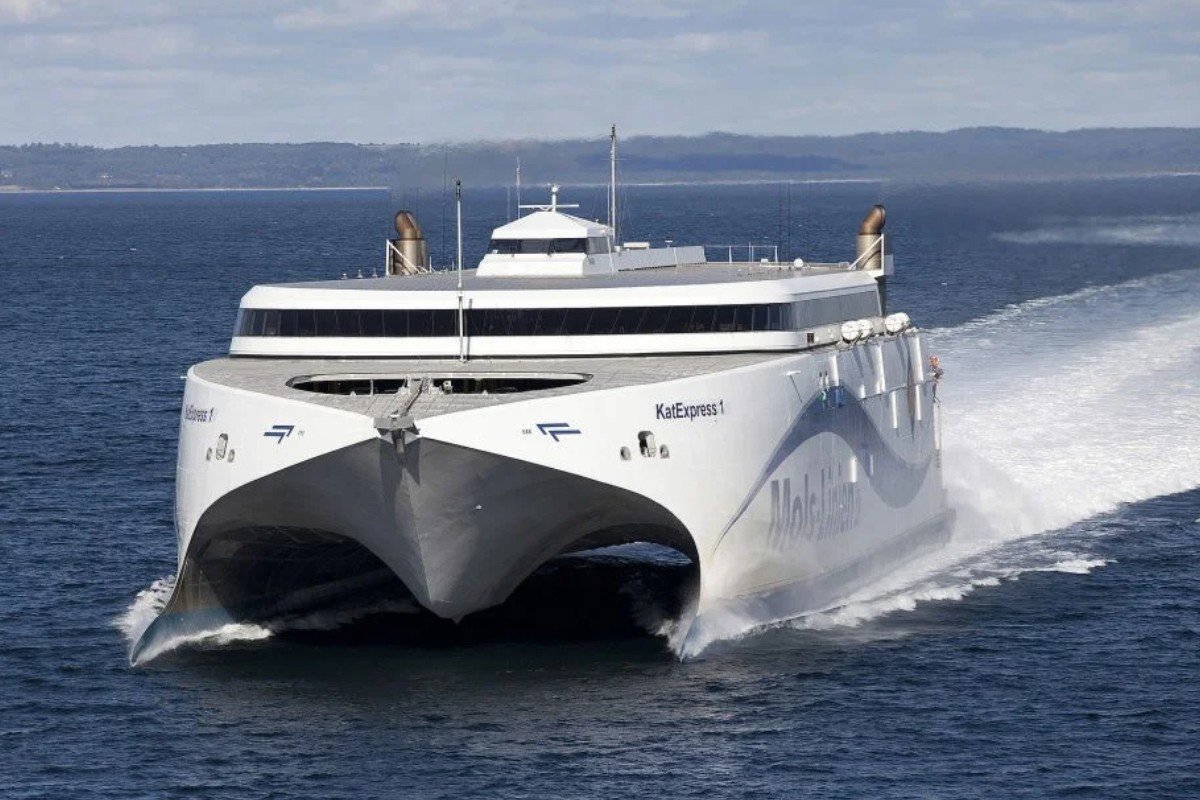
A catamaran ferry operates at much higher speeds than a standard monohull ferry. The largest ferry operators in the region include Fjord Line, Stena Line, DFDS, SeaJets, and Fred. Olsen Express uses these fast connections to transport passengers quickly across open water. A high-speed catamaran ferry achieves these speeds because of its specialised dual-hull design. A common route using this vessel is the Hirtshals-Kristiansand route, which links Denmark and Norway.
Understanding Speed, Stability, and Range on the Water
Speed on the water is measured in knots. One knot equals one nautical mile per hour, or 1.852 kilometres per hour. Moving fast on water requires overcoming significant drag and friction. Water is dense, and pushing a wide boat through it requires a lot of energy. Catamaran ferries solve this problem by distributing the weight across two very thin hulls. This reduces the wetted surface area and allows the ship to slice through the waves rather than pushing a large bow wave ahead of it.
While a high-speed catamaran offers a fast journey, speed impacts both range and stability. Fuel consumption increases exponentially with speed. Therefore, the fastest ferries typically operate on short- to medium-distance routes, generally under 200 nautical miles, to avoid carrying heavy fuel loads that would slow them down. Regarding stability, the wide stance of the two hulls provides excellent resistance to rolling from side to side. However, when travelling at high speeds in rough seas, these vessels can experience “slamming” as the bridge between the hulls hits the waves. This can result in a stiffer, bumpier ride for passengers compared to slower, heavier monohulls.
A maritime connection is classified as high speed if the ship can reach speeds over 40 knots. Only specialized designs like a high speed catamaran can sustain this performance efficiently.
The Fastest Ferries in the World
The HSC Francisco holds the title of the fastest ferry in the world. Built by Incat in Hobart, Tasmania, this vessel connects Buenos Aires with Montevideo. Powered by liquefied natural gas and two GE LM2500 water jets, it reaches a top speed of 58 knots (107 km/h; 67 mph). As the fastest ferry boat currently in commercial operation, it sets the standard for maritime speed.
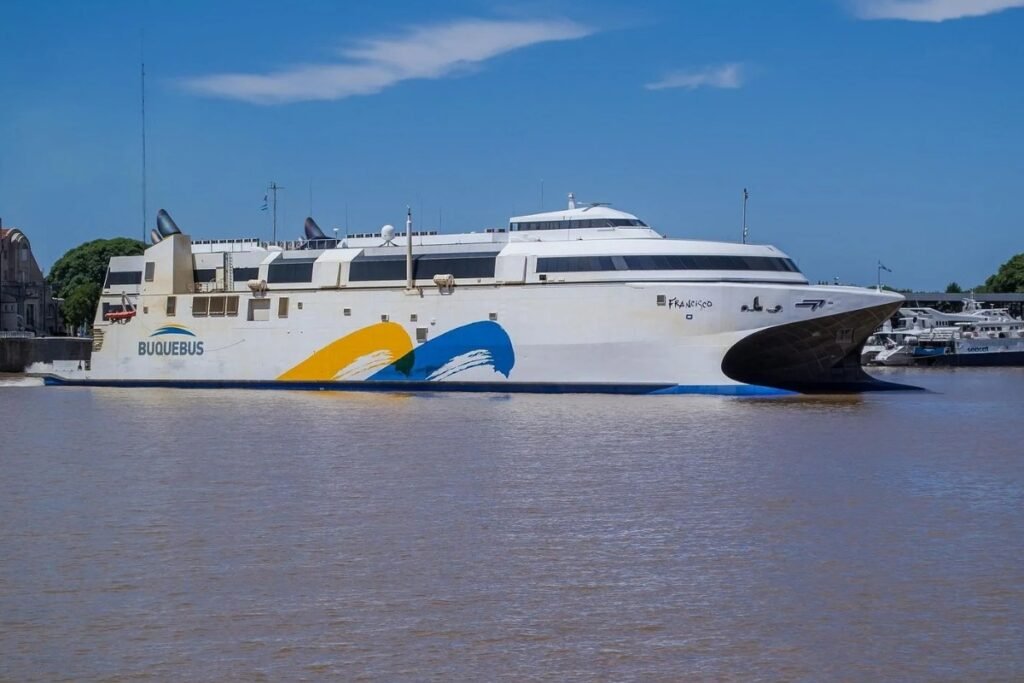
When looking at the fastest ferries in the world, companies like SeaJets and Fred. Olsen Express operate large fleets capable of crossing 40 knots. These fastest ferries are essential for island hopping in regions where saving travel time is highly valued.
Highest Top Speeds of Active Ferries
| Vessel Name | Operator | Top Speed (Knots) | Length (Meters) | Passenger Capacity |
|---|---|---|---|---|
| HSC Francisco | Buquebus | 58 | 99 | 1000 |
| WorldChampion Jet | SeaJets | 50 | 87 | 1055 |
| Benchijigua Express | Fred. Olsen Express | 40 | 126 | 1291 |
| Bajamar Express | Fred. Olsen Express | 38 | 118 | 1100 |
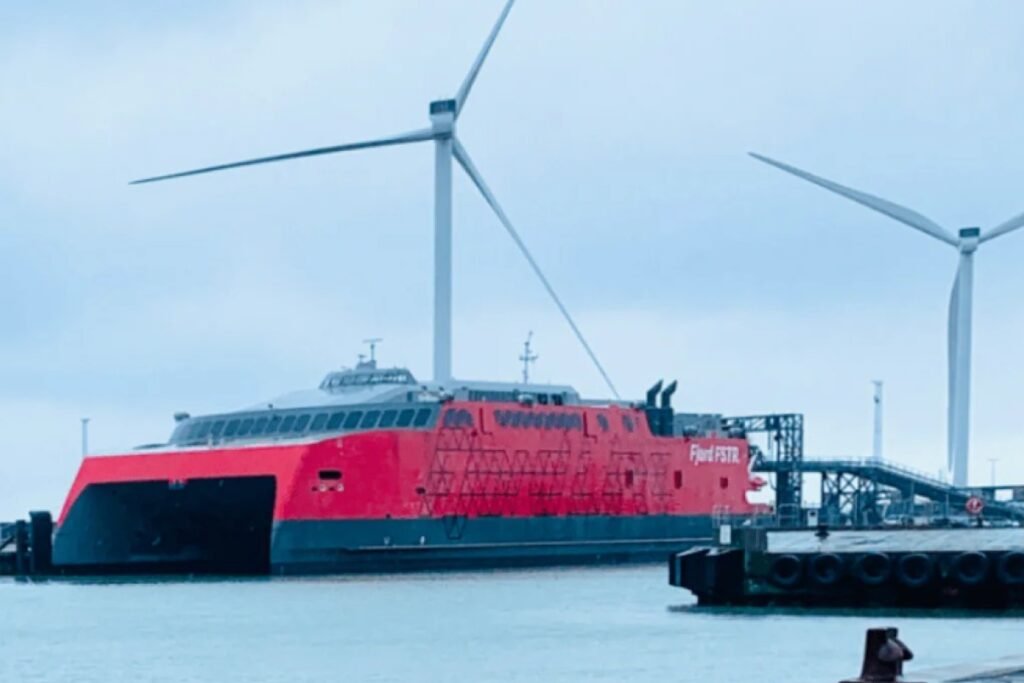
| Fjord FSTR | Fjord Line | 37 | 110 | 1200 |
The Largest Catamaran Ferry Designs
While speed is important, maximizing passenger and vehicle capacity requires immense scale. The title of largest catamaran ferry frequently shifts as new ships are launched. The largest diesel powered catamaran ferries include the HSC Express series (Express 1, 2, 3, and 4) which operate between Aarhus and Odden, as well as Rønne and Ystad in Denmark.
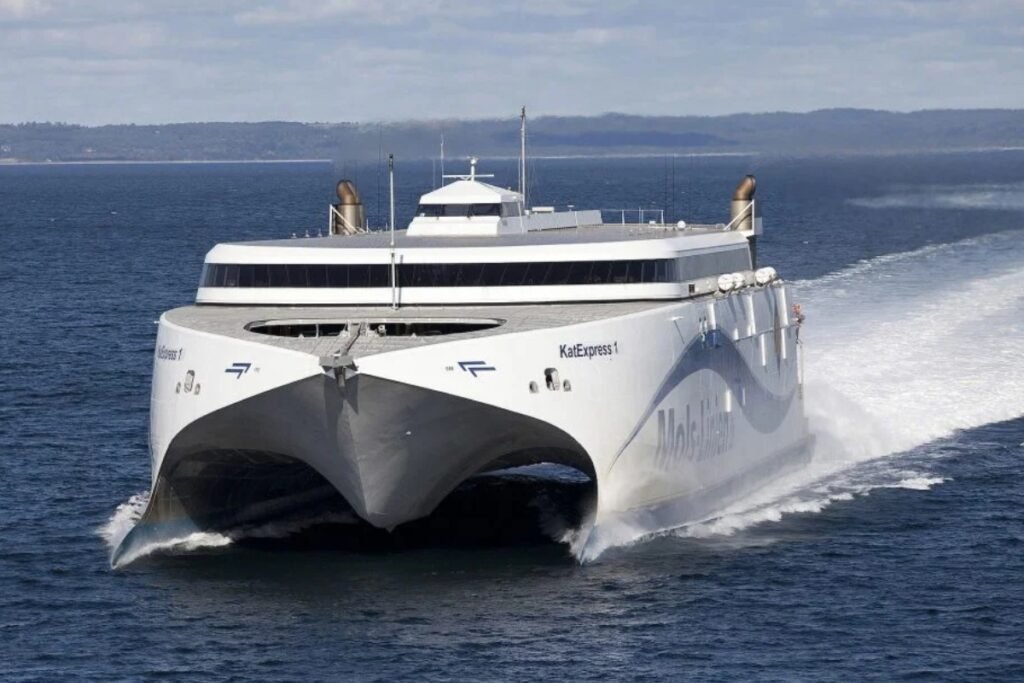
The Express 5, built by Austal for Molslinjen, became the largest catamaran ferry by volume when it was commissioned. It measures 115 meters in length and has the space to transport 1610 passengers and 450 cars.
Shipbuilders are continuously working on larger vessels. In May 2025, Incat in Tasmania launched the *China Zorrilla* (Hull 096) for Buquebus. Measuring 130 meters, it is currently the world's largest electric catamaran ferry, running entirely on battery electric power with a capacity of 2100 passengers. Additionally, Molslinjen recently placed an order with Incat for two fully electric 129-meter catamarans to operate on their Kattegat routes by 2027 and 2028.
Largest Catamaran Ferries by Length
| Vessel Name | Builder | Length (Meters) | Power Type | Passenger Capacity |
|---|---|---|---|---|
| China Zorrilla | Incat | 130 | Battery Electric | 2100 |
| Benchijigua Express | Austal | 126 | Diesel | 1291 |
| Bajamar Express | Austal | 118 | Diesel | 1100 |
| Express 5 | Austal | 115 | Diesel | 1610 |
| HSC Express 4 | Austal | 109 | Diesel | 1006 |
High Speed Catamaran Routes in Europe
Ferry operators run regular catamaran ferries in Scandinavia and the Baltic Sea:
- Domestic routes in Denmark:
- Aarhus to Odden
- Rønne to Ystad
- Gothenburg to Frederikshavn
- Gran Canaria to Fuerteventura (Canary Islands)
- Hirtshals to Kristiansand
- Helsinki to Tallinn
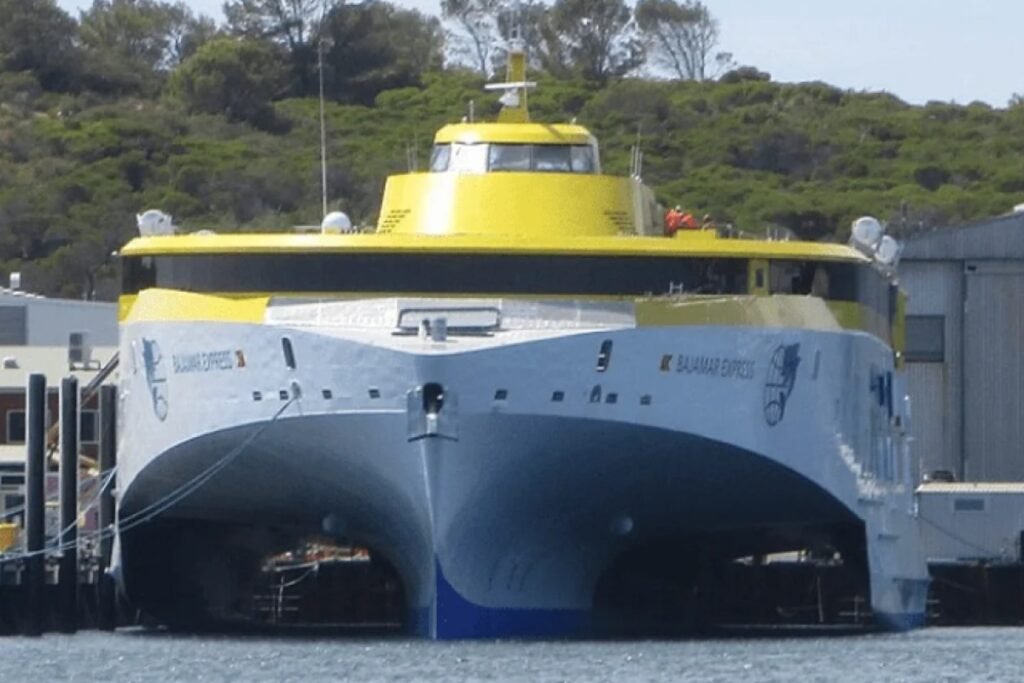
These fast ferries are also common in the British Isles. Operators run ships from Stranraer to Belfast and from England to the Channel Islands. Additionally, companies like SeaJets operate large fleets of high-speed catamarans in Greece.
Images and Data of Global Catamaran Ferries