




Adriatic Sea Ferry Map

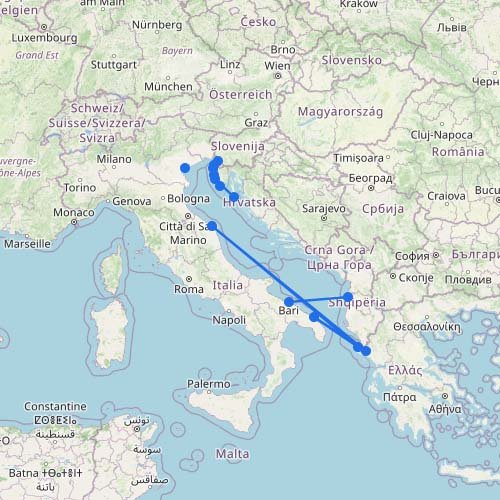
The map above shows the Adriatic as a series of distinct ferry corridors rather than one continuous network. Northern routes from Venice and Trieste mainly serve Istria and nearby coastal ports, while Ancona, Bari and Brindisi connect Italy with Croatia, Albania and Greece.

Use the interactive map to start with your destination. Ancona is the main central Italian hub for central Croatia and longer crossings toward Albania and Greece. Bari offers one of the widest route choices, including connections toward Dubrovnik, Split, Durrรซs, Corfu, Igoumenitsa and Patras. Brindisi can be the more direct option for southern Albania and western Greece when you are already traveling through southern Italy.

Choosing an Adriatic ferry route

The best Adriatic ferry depends on where you are driving from and where you want to arrive. A northern Italian departure can save road miles before boarding, while Bari or Brindisi may provide a shorter sea crossing and a better arrival point farther south. The map shows the available corridors; the comparison below explains their main travel logic.

Destination Main Italian departure ports Usually best for
Istria and the northern Adriatic Venice and Trieste Seasonal passenger travel to Poreฤ, Rovinj, Pula and nearby coastal ports
Central Croatia Ancona Split, Zadar and road trips through central Dalmatia
Southern Croatia Bari Dubrovnik, Split and southern Dalmatian itineraries
Albania Ancona, Bari and Brindisi Durrรซs for central and northern Albania, or Vlorรซ for the south
Western Greece and Corfu Ancona, Bari and Brindisi Igoumenitsa, Corfu and road trips through northern or western Greece
Patras and southern Greece Ancona or Bari The Peloponnese and onward travel toward Athens

Italy to Croatia

The Croatian routes fall into three broad groups. Seasonal fast ferries from Venice and Trieste serve Istria and nearby coastal destinations. These are useful for foot passengers, but they are not generally the main choice for travelers bringing a car.

From central Italy, Ancona provides direct access to ports such as Split and Zadar. Bari is farther south and can be more practical for Dubrovnik and southern Dalmatia. Choose the Croatian arrival port around your itinerary rather than simply booking the shortest advertised crossing.

For Istria or northern Croatia, driving around the northern Adriatic may still be quicker when traveling with a vehicle. The ferry becomes more attractive for central and southern Croatia, especially when it replaces a long drive along the coast.

Italy to Albania

Durrรซs is Albania’s main ferry gateway and is the usual choice for Tirana, central Albania and routes continuing north or east. Ferries reach Durrรซs from Bari and Ancona, with Bari generally offering the broadest choice of sailings.

Vlorรซ is farther south and is better positioned for the Albanian Riviera. Brindisi is the most relevant Italian departure point for this route. The sea crossing may be shorter, but reaching Brindisi requires additional driving through Italy, so compare the complete journey before choosing.

Italy to Greece

For Greece, the main arrival choices are Igoumenitsa, Corfu and Patras. Igoumenitsa is the main mainland gateway for western and northern Greece. Corfu works for travelers staying on the island, while Patras is better positioned for the Peloponnese and onward travel toward Athens.

Ancona reduces the distance you need to drive through Italy but usually means a longer crossing. Bari sits between the northern and southern options and serves several Greek destinations. Brindisi is farther south and can provide a shorter route to Corfu or Igoumenitsa.

Night ferry or driving around the Adriatic?

An overnight ferry can replace a hotel stay and avoid a long drive through several countries. This is particularly useful for Albania, Greece and southern Croatia. It is less automatically advantageous for Istria or northern Croatia, where driving through northeastern Italy and Slovenia may be faster.

Do not compare only the scheduled sailing time. Include the drive to the Italian port, check-in, boarding, disembarkation and the distance from the arrival port to your final destination.

Cars, campers and cabins

  • Check whether vehicles are carried: conventional ferries usually accept cars and campers, while seasonal fast ferries may be passenger-only.
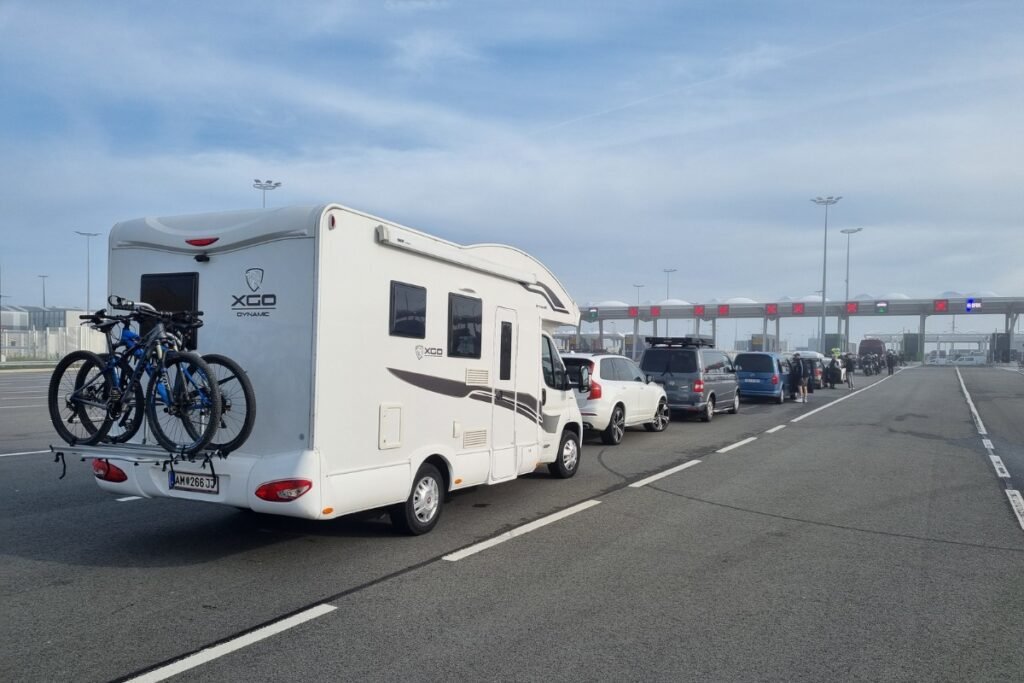
  • Enter the full vehicle size: include roof boxes, bicycle racks, trailers and the complete length of a camper or caravan.
  • Reserve early in summer: vehicle deck space and cabins can sell out before regular passenger seats.
  • Consider a cabin overnight: a private cabin can make longer crossings significantly more comfortable, especially before a full day of driving.
  • Pack a separate overnight bag: access to the vehicle deck is normally restricted during the crossing.
  • Check the exact season: several Croatia, Corfu and northern Adriatic routes operate only during part of the year.

Schedules can vary considerably between summer and winter. Use the interactive map to identify the best corridor, then confirm the operating dates, vehicle rules and check-in deadline for your exact sailing.

Read more

Explore more ferry regions worldwide

Find additional routes and connections with our global ferry route search, using either the direct search or the available filters.
Scroll to Top