
Planning a ferry trip is rarely just about finding one crossing.
More often, you start with a rough idea. You want to get from one country to another, reach an island, avoid a long drive, bring your car, travel overnight, or work out whether the ferry can become a calmer part of the holiday instead of just another transfer.
That is exactly why we rebuilt Ferrygogo.com.
Ferrygogo.com is built for travellers who know they want to travel by ferry, but do not yet know which route, port or combination of crossings makes the most sense. It is a place to start exploring before your trip is fully fixed.
The new Ferrygogo.com is designed as a starting point for ferry travel planning. Not only for people who already know which ferry route they want to book, but especially for travellers who are still comparing their options. Which ferry routes are possible? Which ones take cars? Which ones are night crossings? Which ones are short local ferries, island ferries or more practical long-distance links?
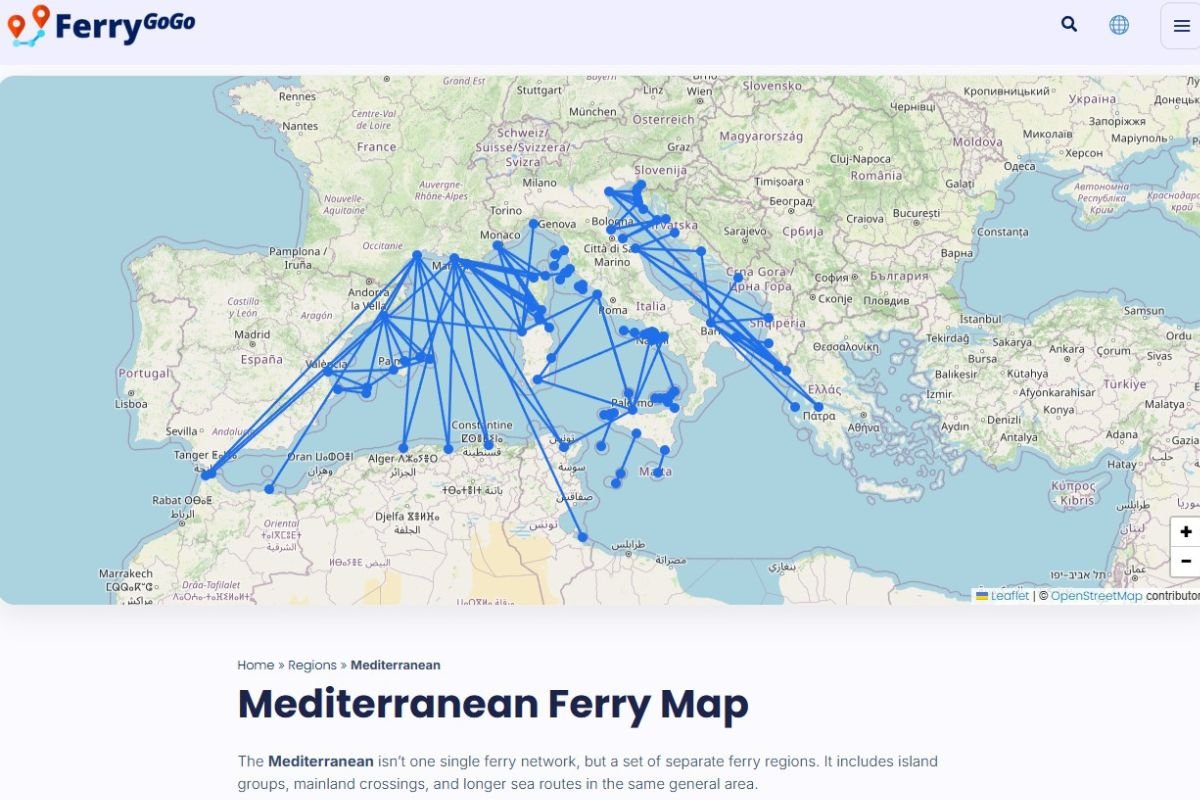
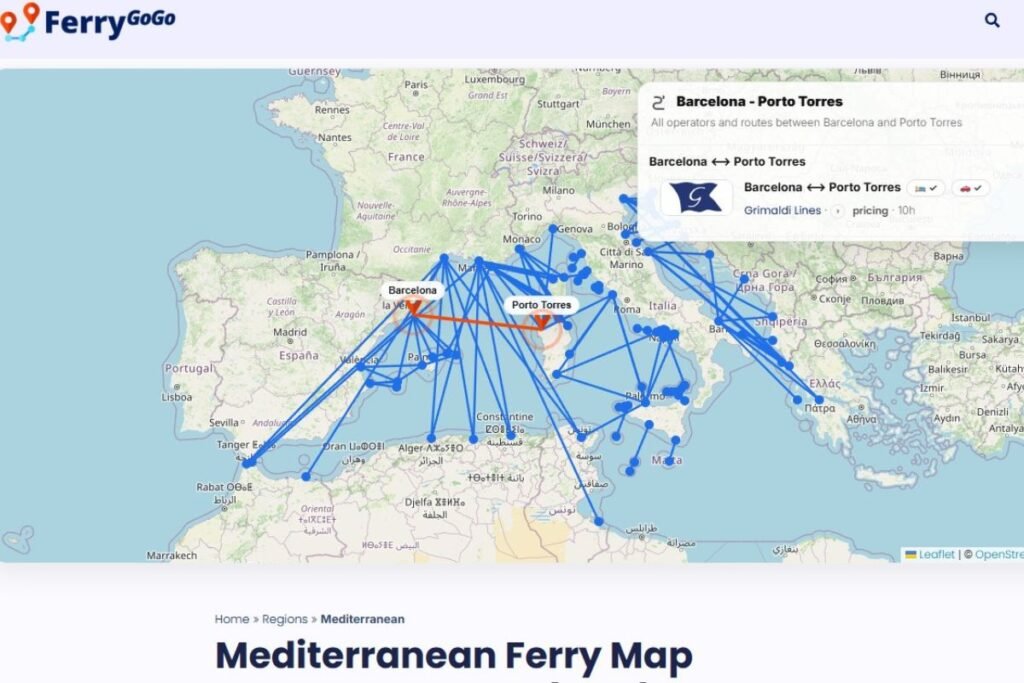
At the heart of the new website are our interactive ferry maps.
These maps make it much easier to see how ferry routes connect places. You can explore how to get from A to B, and in many cases also how to continue from B to C. That might mean comparing ferry routes from Ireland to the UK and mainland Europe, looking at ferries from France to the UK or Mediterranean islands, or finding the best way to reach islands such as Sardinia, Sicily, Corsica, the Greek islands or the Balearics.
The idea is simple: ferry travel becomes much clearer when you can actually see the routes.
More than just a list of crossings
On Ferrygogo.com, we want each route page and destination page to help you understand the practical differences between crossings.
That means you will increasingly find information such as:
- a visual overview of the available ferry routes
- an indication of typical prices or starting fares
- whether the crossing is a day ferry or night ferry
- whether you can bring a car, campervan or motorbike
- whether the route is mainly a local island ferry, a post boat, a passenger ferry or a longer international crossing
- which routes are most useful for a wider holiday itinerary
For many trips, the best ferry is not automatically the shortest one. Sometimes the better option is the route that lands you closer to your first real stop. Sometimes an overnight ferry with a cabin can save a hotel night and turn a long travel day into something much more relaxed. And sometimes a smaller local ferry is exactly what makes an island-hopping route work.
That is the kind of context we want Ferrygogo.com to provide.
A global ferry website with local route planning
Ferrygogo.com is our international ferry platform, but the new structure is not just about being global. It is about making ferry information useful in the right language and for the right travel market.
With Ferrygogo.co.uk, Ferrygogo.nl and Ferrygogo.de, we already have strong local platforms for the UK, Dutch and German ferry markets. The new Ferrygogo.com allows us to continue that growth and make our ferry route information easier to expand into other countries, languages and regions.
For example, travellers in Ireland can use Ferrygogo.com/ie/ to compare the best ferry routes to the UK and mainland Europe. On the French section, Ferrygogo.com/fr/, travellers can compare routes to the UK, Ireland and the Mediterranean islands. On Ferrygogo.com/it/, the focus is different again: ferries to Sardinia, Sicily, the Italian islands and crossings towards Croatia and the wider Adriatic.
The same principle applies to other local sections, such as Ferrygogo.com/es/ for Spanish ferry routes and Ferrygogo.com/us/ for ferry routes in the United States. Although Ferrygogo.com covers ferry travel worldwide, the pages are built around local travel questions. The routes, destinations and explanations should match the way people in that market actually plan their trips.
Where to start on Ferrygogo.com
If you are still exploring your options, the easiest place to start is with a country, island or destination page. From there, you can use the map to see which ferry routes connect the region, which ports are involved and whether a crossing fits the type of trip you have in mind.
For example, you can explore ferry routes from Ireland, compare ferries from France, check ferries in Italy or browse Spanish ferry routes to the Balearic Islands, Canary Islands and beyond.
This is especially useful when you do not yet know the best port or route. You might know that you want to reach an island, take your car abroad, avoid a long drive, travel overnight or build a bigger road trip around one or more ferry crossings. Ferrygogo.com is designed to help you compare those options before you commit to a route.
Built around maps, backed by experience
The maps are the starting point, but Ferrygogo has never been only about maps or schedules.
We will also continue to add our own travel experiences, route advice and practical tips. These will appear on country, destination and region pages, often underneath the interactive maps, where they can give more context to the routes shown above.
That first-hand context is important to us. Over the years, we have taken many of the ferry routes we write about ourselves. We travelled several times with Stena Line between Hook of Holland and Harwich, both with a car and without a car via Rail & Sail. One of those trips even came directly after a long-haul journey from Seoul to London, where the night ferry turned out to be one of the most relaxed parts of the whole return journey.
We have also taken the overnight ferries from the Netherlands to the north of England, including IJmuiden to Newcastle and Rotterdam to Hull. These are the kinds of routes that are easy to underestimate if you only look at sailing time or ticket price. In reality, the cabin, the evening onboard and the fact that you wake up much closer to your destination can completely change the feel of the trip.
On the shorter crossings, we have tested the busy Channel routes as well, including the Dover to Calais route with different operators. And on the western side of the Channel, we have travelled with Brittany Ferries on routes such as Saint-Malo to Portsmouth and Portsmouth to Cherbourg. Those experiences are useful because they show how different ferry routes can feel: some are about speed, others are about comfort, location or simply starting your holiday in a calmer way.
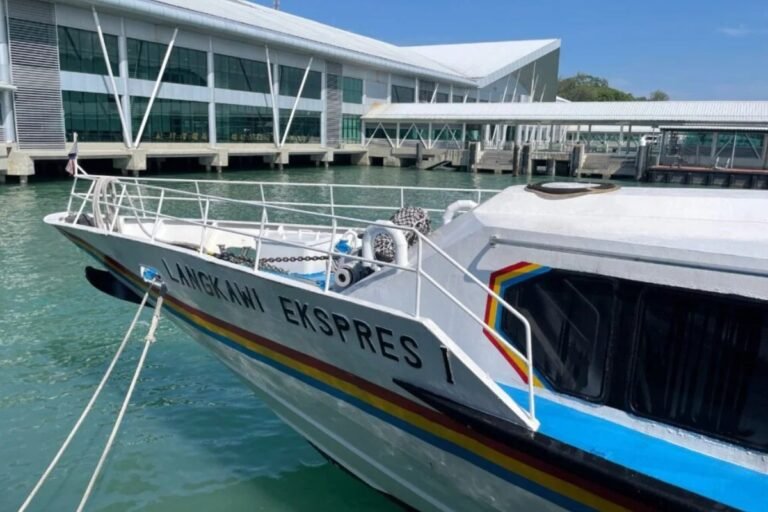
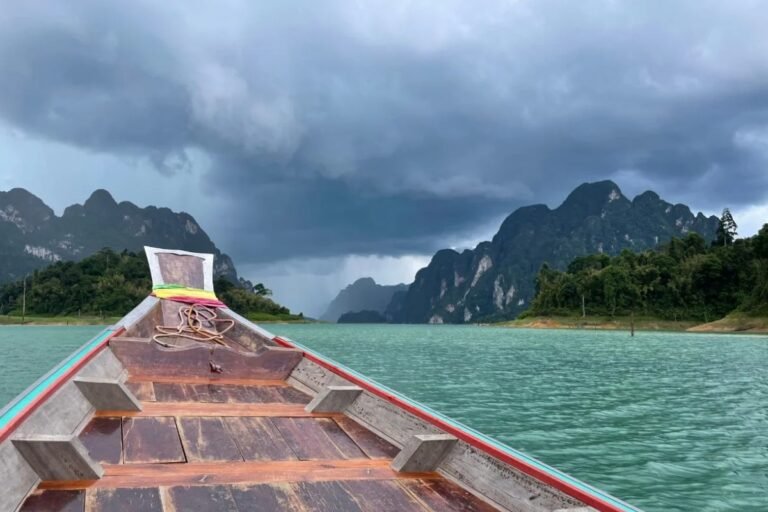
And our ferry experience is not limited to the Channel or the North Sea. We have also taken ferries in Scandinavia, including routes linked to Denmark and Sweden, and used ferries around Mediterranean islands such as Mallorca, Formentera and Sardinia. Further from home, we have travelled by ferry in Australia and on local island routes in Thailand and Malaysia. Those trips are very different from a North Sea night ferry or a Channel crossing, but they all help us understand the same thing: ferry travel is often about more than just the crossing itself. It is about how the route fits into the wider journey.
That might include advice on when a night ferry makes sense, which port is most practical for families, what to expect onboard, whether it is worth bringing your car, or how a ferry route compares with flying, driving or taking the train.
We will also keep publishing ferry travel research, price comparisons and wider holiday cost studies. Ferry travel is part of a bigger travel decision. The ticket price matters, but so do fuel costs, hotels, car hire, luggage, flexibility, emissions and the overall feel of the journey.
That wider picture is where Ferrygogo can be most useful.
What sets Ferrygogo apart?
Ferrygogo is not just a ferry database.
Of course, we collect and structure route information, maps, operators, destinations and practical details. But what makes Ferrygogo different is that we also travel by ferry ourselves. Often. Sometimes on the same route more than once, and sometimes in very different ways: with a car, without a car, as a family, on a night ferry, as foot passengers, or as part of a longer road trip.
That first-hand experience changes how we look at ferry travel. We know the difference between a crossing that looks short on paper and a crossing that actually makes your travel day easier. We know why a cabin can be worth it with children, why a slightly longer route can sometimes save energy on the other side, and why the best ferry is not always the fastest ferry.
A database can tell you that a route exists. But it usually cannot tell you how that route fits into a real holiday. It does not always explain whether a longer crossing might actually make your journey easier, whether a certain port is more relaxed, or whether choosing a different ferry could save you several hours of driving after arrival.
Those are the questions travellers often really have.
With Ferrygogo, we try to combine structured ferry route information with real travel experience and practical judgement. We understand that people are not always searching for a ferry by route name. Sometimes they are searching for the easiest way to reach an island, the most relaxed route to France, the best ferry with a car, or a sensible alternative to flying.
That is where our maps, guides, route comparisons and first-hand tips come together.
Our goal is not just to show which ferries exist, but to help you understand which ferry route makes the most sense for your trip.
The go-to place when you are still figuring out the trip
The new Ferrygogo.com is built for the moment before everything is fixed.
You may not know yet whether you should sail from France, Ireland, Spain, Italy, Greece, Croatia or the Netherlands. You may not know whether the best route is a short daytime ferry, a long overnight crossing or a combination of two routes. You may simply be asking: which ferry options do I actually have?
That is where Ferrygogo.com should help.
Start with the map. Compare the routes. See which ports connect. Check whether you can bring your vehicle. Then use the destination pages, route guides and travel tips to shape the trip that works best for you.
Because a ferry crossing is not just a line between two ports. Very often, it is the part of the journey that decides how relaxed, practical and enjoyable the whole trip becomes.